
Hillsdale Released Mugshot Records
A booking photograph documents appearance at intake. It belongs to the booking record, not to the later court outcome. The image can remain in agency files after release even if Hillsdale JailTracker no longer displays the person. Michigan FOIA applies to existing county records, subject to exemptions and redaction. It does not require HCSO to keep every image online.
Public access depends on the record and context. Juvenile material, sealed or nonpublic cases, active investigative details, privacy interests, and security concerns may limit disclosure. An adult booking photo should be requested by the exact booking when possible. A person can have more than one booking and more than one photo, so a broad name-only request can return the wrong event.
Release also does not resolve the case. Bond, time served, dismissal, court order, and transfer describe different paths. Pair the image with the booking number, charges as booked, release disposition, and court result. A photograph by itself cannot show conviction, dismissal, or whether the person entered another agency’s custody.
Hillsdale Mugshot Access Channels
Start with the agency that created the image. Hillsdale County Jail and MDOC use separate intake systems. MI-VINE is a custody-notification tool and is not a dependable photo archive. News reports may reproduce an agency image, but the article is secondary evidence and may not reflect the final case result.
| Channel | Photo availability | How to use it |
|---|---|---|
| Hillsdale JailTracker | An image may appear on a current booking card | Open the current inmate name and match booking details |
| HCSO records request | Ask for the stored image tied to a booking | Use JustFOIA and identify the booking |
| MDOC OTIS | An offender image may appear when available | Search the six-digit MDOC number or identity |
| MI-VINE | Not a promised historical photo source | Use for custody change and release alerts |
| Court record | Usually explains disposition, not jail photo access | Use the case number to verify what happened |
| Official news release | May include an agency image | Check date, source, and later court result |
No official Hillsdale 24-hour or 72-hour release feed was found. The current roster must not be relabeled as a released-mugshot gallery. When a name disappears, use MI-VINE, HCSO, and the court to establish the custody event, then request the photo as a separate existing record.
Hillsdale MDOC Offender Photos
An MDOC offender image is not the same file as a Hillsdale County Jail booking photo. The official OTIS offender search can display an image when available for a person under Michigan corrections jurisdiction or within its public post-discharge window. It also supplies status, location, sentence, and supervision fields that help place the image in context.
Search by the six-digit MDOC number when known. Otherwise use the name and narrow with available filters. Confirm the result through several identity details before using the image to identify a record. A county arrest does not ensure an OTIS profile. People whose cases remain at the county level may never enter MDOC custody or supervision.
OTIS usually retains public information for three years after discharge. MDOC may also remove public data after verifying a set-aside order. Later absence therefore has several possible explanations. It does not prove that a Hillsdale booking photo never existed, and the county and state images may have different retention and access rules.
For a specific nonexempt state record, MDOC FOIA can be used after identifying the person and number. Request a particular public photograph, parole order, date record, or discharge certificate. Do not ask for a PENPACK as a shortcut. MDOC limits that certified packet to recognized criminal-justice authorities conducting official business.
Hillsdale Sheriff App Limits
HCSO describes JailTracker as a source for booking details and court appearances for people “currently held.” Opening a name supplies fuller current-booking detail, and the vendor layout can include an image when the agency makes one available. The county does not promise a former-inmate archive, a release tab, or a retention period for a photo after roster removal.
The named “Hillsdale County Sheriff’s Office” smartphone app is also easy to overstate. HCSO promotes news, road closures, endangered or missing-person alerts, and tip submission. Its published feature list does not claim an inmate roster, recent releases, or mugshots. Do not assume an app feature merely because another county’s sheriff app has one.
This negative local finding narrows the correct path. Preserve the booking number while the person is visible. After removal, use the county records portal rather than searching for an unverified app gallery. The Released Last 24 Hours page explains why roster disappearance is not affirmative proof of release.
Request Hillsdale Booking Photos
Use the Hillsdale County JustFOIA portal for a written HCSO record request. Michigan FOIA, MCL 15.231 through 15.246, covers existing nonexempt public records. The request must describe the record well enough to retrieve it. Ask for the photograph associated with one booking, not every image bearing a similar name.
- Gather the full legal name, booking number, and approximate admission date.
- Open the county JustFOIA new-request form.
- Request the booking photograph tied to that exact booking.
- Also request the release date, release disposition, and court or case number if needed to place the image in context.
- Ask for electronic copies and a good-faith fee estimate before work above a chosen amount.
- Submit complete contact information and keep the confirmation.
- Review any redaction or denial against the stated exemption and appeal route.
The county may grant, deny, grant in part, or take one extension after its initial five-business-day response period. A response is not the same as production of all records. Permitted labor, copying, media, and mailing charges can apply under MCL 15.234. Research did not find a flat Hillsdale fee for one photo, so none should be assumed.
The Michigan Attorney General FOIA guide summarizes the state access framework.
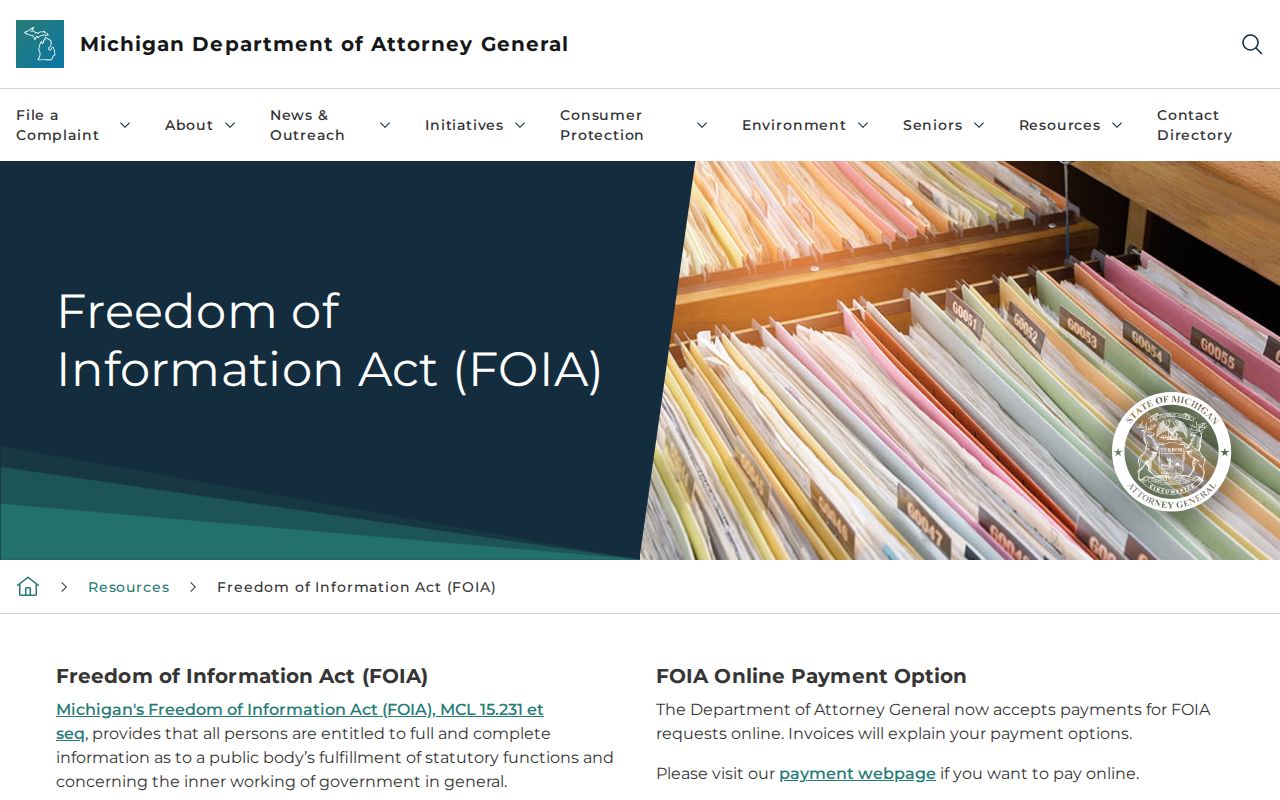
That statewide guide helps interpret timing and fees, while Hillsdale County remains the office that holds the local booking image.
Verify Hillsdale Mugshot Context
Private image pages and old news stories are not the first source for a Hillsdale booking photo. They can omit later release, dismissal, amendment, or set-aside information. No private aggregator was verified as complete enough to recommend. A pay-for-removal offer is not an official release record and does not control HCSO or court files.
If an official news release carries a photo, record its agency, date, and stated purpose. Then check the later court file. The 2B District Court covers misdemeanors and early felony proceedings, while the 1st Circuit Court handles felony cases after bindover. A docket is a navigation aid. A signed order or certified register is stronger proof of the outcome.
Identity matching should use at least two fields. Similar names, aliases, old images, and repeat bookings can produce mistakes. Stop when the booking number, date, or case does not align. Do not treat visual resemblance as enough.
Source order helps when copies conflict. Prefer the current signed court order or certified agency record, then the responsible custody agency’s record, an attributed MI-VINE notice, the court register, an official release, and reputable news reporting. A private copy ranks last because its date, edits, and later updates may be unclear.
Keep the booking event and case outcome separate. A dismissal can end the named charge while another hold remains. A transfer can close the Hillsdale booking without community release. A set-aside can later change ordinary public visibility. Label each fact with its source and date rather than forcing all records into one claim.
Michigan Clean Slate Visibility
Michigan calls expungement a set-aside. Eligible misdemeanors can be automatically set aside after seven years, while eligible felonies generally use ten years from sentence imposition or completion of MDOC imprisonment, whichever is later. Exclusions, conditions, and numerical limits apply. A set-aside makes a qualifying conviction nonpublic in ordinary public records but does not erase every restricted law-enforcement record.
MDOC states that it removes public OTIS data after it confirms the court order. Therefore, an absent profile years later does not disprove earlier custody or release. Send the order first to the sentencing court or agency that controls the record. A third party may need a separate correction or removal request supported by the current official disposition.
No broad Michigan booking-photo-specific anti-pay-to-remove statute was identified in the reviewed official sources. Do not invent a removal deadline or fee ban. HCSO must assess its record under Michigan FOIA, applicable exemptions, and controlling court orders.
A correction request should identify the exact URL or record, the booking number, and the later official order. For an HCSO-held image, direct the issue to Hillsdale County. For an OTIS image, follow MDOC’s correction route. Court-data errors begin with the sentencing court, while supervision errors go to the listed field office. Each office controls only its own record.
Removal from one public display does not compel every other holder to erase a lawful copy. Conversely, an old private image does not override a current set-aside or dismissal record. Keep the official disposition with the request, state the narrow correction sought, and avoid sending unneeded personal data. The response and any stated exemption create the record for the next review step.
A booking image should always retain its event label. Identify it as an arrest or intake photo, name the holding agency, and state the booking date when the record supports those facts. Add the later disposition or release source rather than letting the image imply an outcome it cannot prove.